
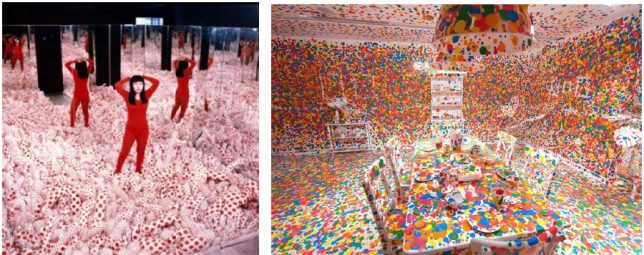
The popularity of Yayoi Kusama’s trippy, immersive Infinity Mirror Rooms- which everyone has Instagrammed and became selfie magnets on social media internationally- has reached a feverish peak. Six of the rooms anchor the exhibition Yayoi Kusama: Infinity Mirrors which opened in October at the Broad museum, each chamber no larger than a modest storage shed and equipped with mirrors, lights and sculptural objects. But as the exhibition has traveled from the Hirshhorn Museum and Sculpture Garden in Washington, D.C., to the Seattle Art Museum and now L.A., these Infinity Mirror Rooms have generated Hamilton-esque hype every step of the way. When the Broad unleashed 50,000 advance tickets online in September, the $25 passes sold out in less than an hour. The museum soon released an additional 40,000 tickets- and they went within two hours. The first U.S. museum survey of the 88-year-old Tokyo artist’s Infinity Mirror Rooms will be the Broad’s most popular exhibition since its inaugural show in 2015. But just why are the rooms so popular? “It’s unprecedented in recent years, at least since I’ve been a curator,” says the Hirshhorn’s Mika Yoshitake, who organized the exhibition. “A lot of it has to do with the rise of social media. But also, in an age of social media where we’re inundated with our cameras and smartphones, these are all analog. It’s a very refreshing, immersive experience.”
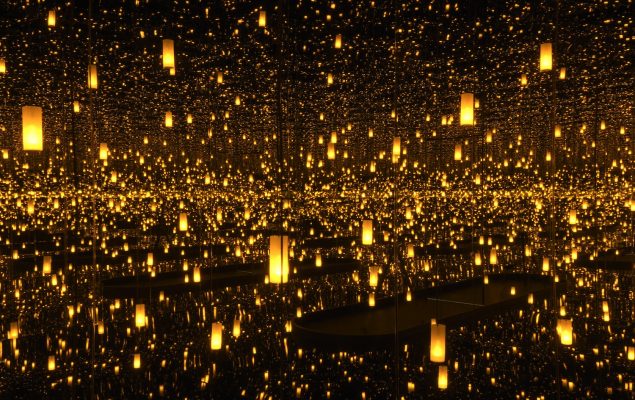
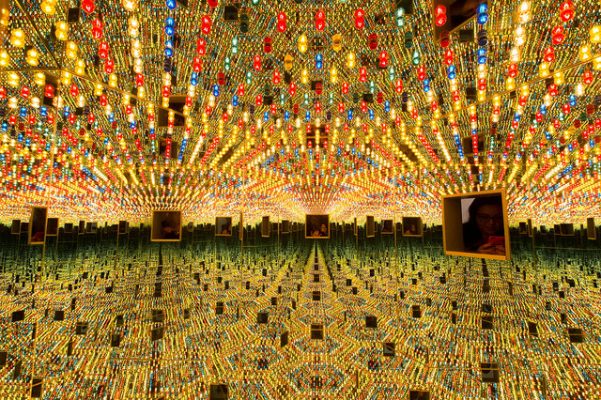
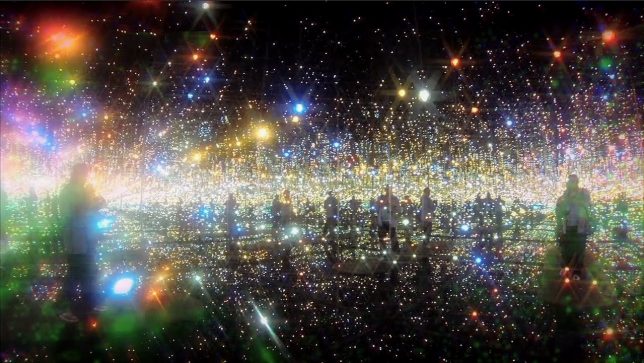
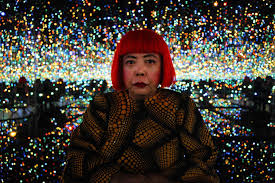
Visitors peer inside, and half-moon slivers of faces stretch into infinity. An eye blinks in the darkness, an almond-shaped orb and feathery lashes twitching before being swallowed up by a swirling galaxy of flickering, multicolored lights. The work- Kusama’s first Infinity Mirror Room, finished in 1965 and re-created in 2016- places the viewer in a grove of crimson-spotted, tuber forms reflected in surrounding mirrors, an Alice in Wonderland-like field of poppies. The so-called “Polka Dot Princess” is notoriously secretive about the magic behind her Infinity Mirror Rooms. But the materials they’re made of are surprisingly simple: hand-sewn and stuffed cloth, board and mirrors in her first room; wood, metal, mirrors and tiny, multicolored lightbulbs in her second. The Infinity Mirror Rooms became more sophisticated as new technology emerged, as works since 2007 may include LEDs, black glass and multimedia video projections. But mirrors remain in them all. So who’s the fairest of them all? Kusama, of course. www.thebroad.org
Tags: Art, Culture, Exhibits, Infinity Mirrors, Los Angeles, The Broad Museum, Yayoi Kusama


